
Cart is empty
Charging Schedules vs. Duty Schedules: Why Every eBus Depot Needs Both
30/07/2026
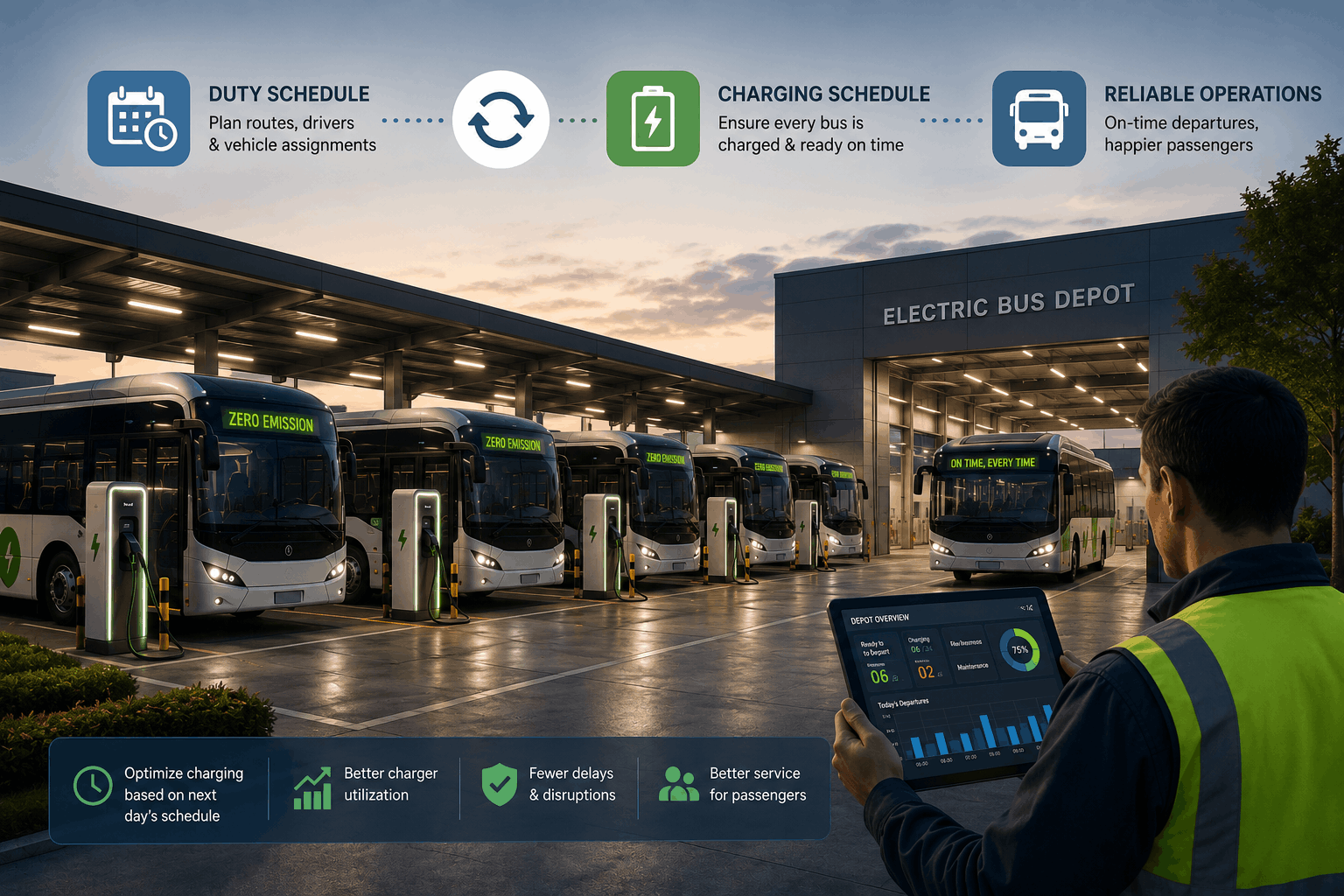
Electric buses are changing public transport, but they are also changing how depots operate. With diesel buses, refuelling was usually the last task before the vehicle was ready for service. Electric buses are different. Charging takes longer, chargers are shared, and every vehicle needs enough battery before its next trip.
This is where two different plans come into the picture: duty schedules and charging schedules.
They solve different problems, but neither works well without the other.
What is a Duty Schedule?
A duty schedule is the operational plan for the fleet. It decides which bus will operate which route, when it should leave the depot, when it will return, and which driver is assigned to the service.
For dispatch teams, this is the daily roadmap. If the duty schedule changes, fleet operations change.
What is a Charging Schedule?
A charging schedule focuses on energy instead of operations.
It decides:
- Which charger a bus should use
- When charging should begin
- How long charging should continue
- What battery level is required before departure
The objective is simple: every vehicle should be ready before its next assignment without wasting charger capacity or electricity.
Where Things Go Wrong
The real challenge isn't creating either schedule. The challenge is making sure both schedules stay aligned.
Consider a simple example.
A bus is expected to return at 9:00 PM but reaches the depot at 10:00 PM because of traffic. Charging starts an hour later than planned. The following morning, that same vehicle has a 5:30 AM departure.
If nobody updates the charging plan, the bus may still be connected to the charger when dispatch begins. Nothing has failed. The charger works. The bus works.
The schedule doesn't.
Why First Trips Matter
The first departures of the day carry office workers, students, airport passengers, and early commuters. Missing one of those services affects more than a single route. Dispatch teams begin reshuffling vehicles.
Drivers wait for replacement buses. Recovery time disappears. Passengers only notice one thing—the bus is late.
Most of these situations begin inside the depot several hours earlier.
Planning Charging Around Operations
Many depots still plan charging separately from fleet operations. That approach becomes difficult as electric fleets grow.
A better question isn't:
"Which bus should charge first?"
It's:
"Which bus needs to leave first tomorrow morning?"
That small change completely changes charging priorities. Vehicles with early departures receive priority. Buses running longer routes can be allocated additional charging time.
Vehicles scheduled for maintenance can be planned differently. Charging becomes part of operations instead of a separate activity.
Why Manual Planning Doesn't Scale
Managing ten electric buses is manageable. Managing two hundred is a different story.
Every evening, planners have to consider:
- Vehicle arrival times
- Charger availability
- Battery levels
- Route distance
- Driver duties
- Maintenance requirements
- Power availability
Trying to coordinate all of this using spreadsheets quickly becomes difficult. As fleet size increases, manual planning becomes slower and more error-prone.
Connected Depot Operations
Modern depot platforms bring these activities together instead of treating them as separate systems. When charging, scheduling, maintenance, and fleet availability are connected, planners can identify conflicts before they become operational problems.
If a bus returns late, the charging plan can be adjusted. If a charger goes offline, another vehicle can be reassigned automatically. If tomorrow's first departure changes, charging priorities can change with it.
That level of visibility helps operators avoid last-minute decisions.
How Arena Softwares Supports eBus Operations
Electric fleet management isn't just about monitoring chargers. Operators need a complete view of depot operations.
Through RouteSync, Arena Softwares connects duty scheduling, EV charging management, fleet allocation, maintenance planning, driver management, and operational analytics within a single platform.
Instead of switching between multiple systems, depot teams work with one operational view. That makes it easier to prepare vehicles, manage charging resources, and keep services running on schedule.
Final Thoughts
Electric buses have introduced a new layer of planning inside every depot.
Charging schedules and duty schedules may serve different purposes, but they depend on each other every day.
When both are planned together, buses leave on time, charging infrastructure is used more efficiently, and operators spend less time reacting to unexpected issues.
As electric fleets continue to expand, connected planning will become just as important as the vehicles themselves.
79
 Facebook
 Instagram
 LinkedIn
 YouTube