
Cart is empty
Using AI in Traffic Management: Beyond Surveillance and Enforcement
05/05/2026
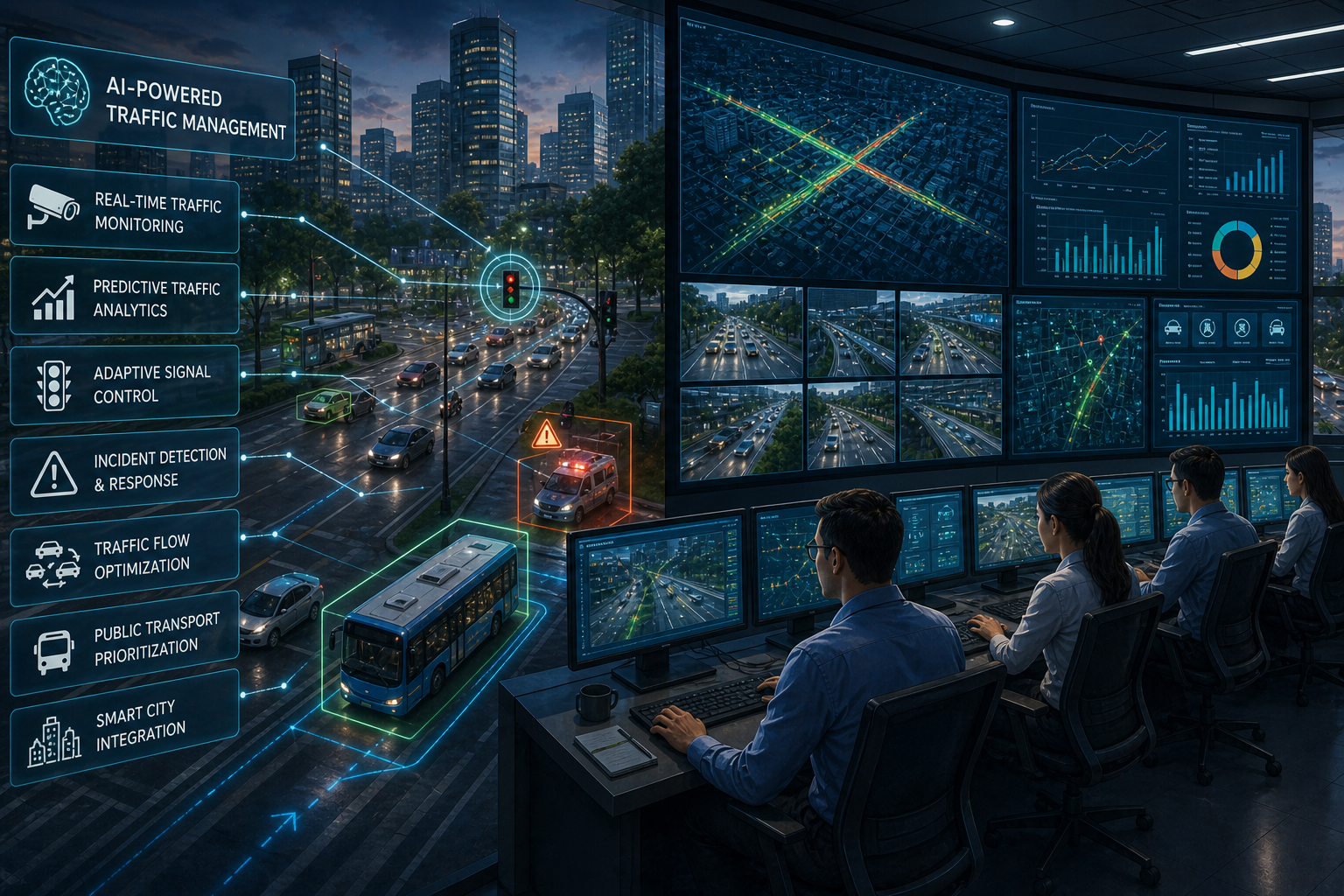
When cities first brought AI into traffic systems, the thinking was quite practical.
They needed better monitoring. Too many violations, too much dependency on manual enforcement, and not enough visibility at key junctions. AI solved that quickly—cameras got smarter, violations were detected automatically, and enforcement became more consistent. For a while, that was enough.
But if you talk to people actually running traffic operations today, the conversation has clearly moved on. Enforcement still matters, but it’s no longer the main problem.
The bigger question now is simpler, and harder at the same time: how do you make traffic move better, not just behave better?
Where Traditional Traffic Systems Fall Short
Most traffic systems—even fairly advanced ones—are still reactive. You see congestion build up. Then you respond. Signals get adjusted, teams intervene, maybe a diversion is set up. But all of that happens after the pressure has already formed.
The issue isn’t lack of effort. It’s visibility. You’re working with snapshots of what’s happening, not a continuous understanding of how traffic behaves over time.
That’s where AI starts to make a difference—but not in the way people first expected.
What Actually Changes with AI
The real shift is not about automation. It’s about perspective.
When AI systems run over time, they don’t just capture events—they start recognizing patterns. And once those patterns are visible, traffic stops feeling random.
You begin to notice things like:
- certain junctions always slowing down just before peak hour fully kicks in
- corridors that behave differently on Mondays versus weekends
- small disruptions that consistently trigger larger bottlenecks
None of this is surprising when you see it. The difference is—you couldn’t see it clearly before.
The Practical Side of Prediction
Prediction sounds like a big promise, but in traffic management, it’s often quite grounded. It’s less about forecasting the future and more about recognizing what usually happens next.
Once patterns are understood, teams can start acting earlier:
- signal timings can be adjusted before queues build up
- traffic can be distributed more evenly across nearby routes
- pressure points can be managed before they escalate
It doesn’t eliminate congestion—cities are too complex for that—but it changes how manageable it becomes.
Signals Start Behaving Differently
Signal control is where this becomes visible. Traditionally, signals follow fixed plans. They’re designed for average conditions, not real ones. And that’s where inefficiency creeps in. With AI, signals start reacting to actual flow instead of assumptions.
Over time, you see:
- less unnecessary waiting at low-traffic approaches
- smoother movement through high-pressure junctions
- better coordination between adjacent signals
It’s not dramatic at one intersection. But across a network, it adds up.
Public Transport Enters the Picture
One thing that often gets overlooked is how disconnected traffic systems and public transport operations have been. Buses operate within the same network, but traffic signals don’t really “know” that. So delays at intersections quietly affect service reliability.
This is starting to change.
When AI systems begin factoring in public transport movement, priorities can shift slightly:
- buses on key routes don’t lose as much time at signals
- high-demand corridors get more balanced flow
- delays don’t cascade as easily across trips
When combined with platforms like RouteSync from Arena Softwares, this becomes more than just theory. Real-time bus movement can actually influence how traffic systems respond.
That’s where integration starts to matter.
It’s Not Just About Enforcement Anymore
Enforcement will always be part of the system. It keeps discipline in place. But cities are realizing that enforcement alone doesn’t improve mobility.
The bigger gains come from:
- reducing friction in traffic flow
- making better use of existing roads
- supporting public transport reliability
- reacting earlier instead of later
That’s where AI fits in more naturally.
What Still Gets in the Way
Of course, none of this is plug-and-play.
Most cities are working with:
- legacy systems that weren’t designed to integrate
- different departments handling traffic and transport separately
- inconsistent data across systems
So progress tends to be gradual. But once systems start connecting—even partially—the benefits become noticeable fairly quickly.
Why This Shift Is Happening Now
Traffic isn’t getting simpler. Cities are growing, travel patterns are shifting, and expectations are higher than they used to be. Building more roads isn’t always the answer.
Using existing infrastructure more intelligently is where most cities are heading—and AI plays a role in that.
Not as a standalone solution, but as part of a larger system that includes traffic, public transport, and operations working together.
Final Thought
AI in traffic management didn’t start with big ambitions. It started with a practical need—monitoring and enforcement. But its role is gradually expanding.
Not toward something futuristic, but toward something more useful: understanding how traffic behaves, and improving it in small, consistent ways. And in most cities, that’s exactly what’s needed.
If your city is exploring how to connect traffic systems with real-time public transport operations, you can request a demo from Arena Softwares to see how platforms like RouteSync help bring these systems closer together in practice.
227
 Facebook
 Instagram
 LinkedIn
 YouTube