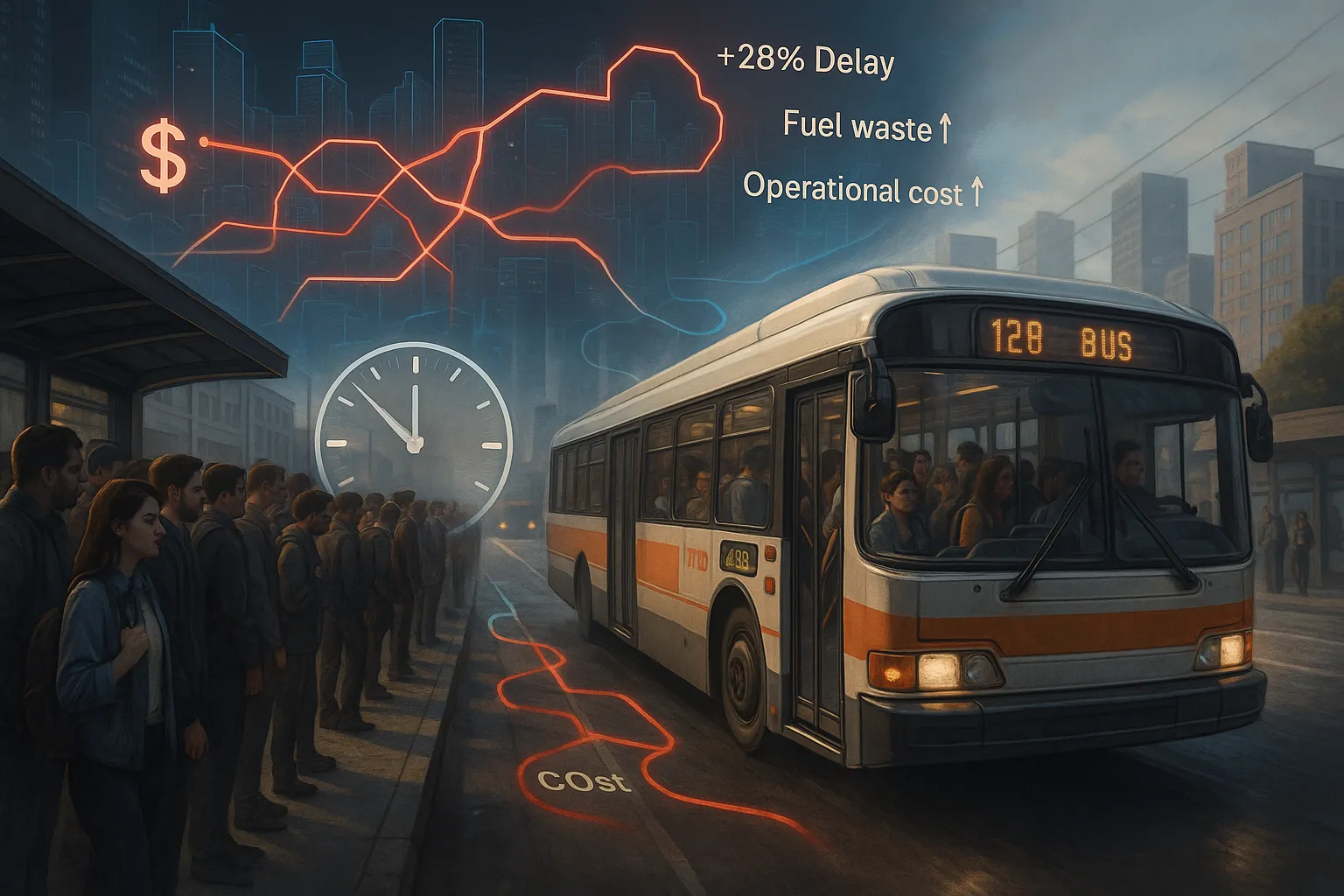
If you’ve ever waited longer than expected for a bus, watched three half-empty shuttles pass by, or sat through an unnecessarily long journey that should’ve been simple, you’ve experienced the real impact of poor route planning. And while these everyday inconveniences seem small at first, their hidden cost — for operators, passengers, and entire cities — is far higher than most people realize.
Public transport is meant to make movement easier. But when routes are outdated, poorly planned, or disconnected from actual demand, the system slowly becomes expensive, inefficient, and frustrating for everyone involved.
The irony? Many of these issues are avoidable.
Why Poor Route Planning Creates a Domino Effect
When a route isn’t designed around real travel patterns, everything that depends on it begins to slip. Buses run more kilometres than needed. Drivers spend longer in traffic. Schedules become harder to maintain. And passengers—the heart of the system—lose confidence and start looking for alternatives.
What seems like “just a bad route” turns into a chain reaction:
- Higher operational costs because buses travel unnecessary distances.
- Fuel wastage due to inefficient loops and idling in the wrong places.
- Lower ridership because passengers lose trust in unreliable service.
- Driver fatigue from constantly battling unpredictable routes.
- Increased maintenance as vehicles wear out sooner than expected.
Little by little, the cost of inefficiency adds up — financially and experientially.
How Outdated Routes Disconnect from Real Demand
Cities evolve quickly. New residential clusters appear. Office hubs shift. Traffic patterns change. But public transport routes often stay frozen in time. A route that worked ten years ago might barely make sense today.
The result?
Empty buses in some areas. Overloaded buses in others. Delays that become “normal”. And a transport network that feels out of sync with the people it’s meant to serve.
Demand isn’t static, so routes shouldn’t be either.
Passengers Pay the Price Too
Poor route planning doesn’t only affect operators — it affects commuters in real and tangible ways.
Long detours, inconvenient transfers, unpredictable timings, and extended in-vehicle time all impact a passenger’s day. Some wake up earlier than necessary. Others arrive late to work. Many eventually give up on public transport altogether and switch to personal vehicles or ride-hailing apps.
That shift away from public transit increases traffic congestion, raises emissions, and ultimately widens the gap between how a city should move and how it actually does. It’s a ripple effect that touches everyone, not just bus users.
Where RouteSync Changes the Equation
This is exactly the challenge that RouteSync — developed by Arena Softwares — was built to solve.
RouteSync doesn’t assume demand; it learns it. It studies how people actually travel across the city, not how planners thought they would travel years ago. It identifies hot spots, clusters, peak-hour flow, and low-demand corridors. Based on this, the system suggests routes that are practical, efficient, and far closer to real-world behaviour.
With RouteSync, operators can:
- redesign outdated routes based on true demand,
- eliminate wasteful kilometres,
- balance vehicle load across corridors,
- reduce fuel costs dramatically,
- ensure better punctuality,
- and improve the daily commute for thousands of passengers.
It brings agility into a system that has traditionally been slow to adapt.
One of the most powerful outcomes is simple: the fleet finally starts being used the way it was meant to be used.
Building a Transport System That Actually Works
Public transport succeeds when it does two things well: move people efficiently and move them reliably. Poor route planning works against both goals. But with the right tools, cities and operators can course-correct quickly. RouteSync helps transform public transport from a rigid, outdated system into one that responds to people — not the other way around. It replaces guesswork with clarity and outdated assumptions with fresh, real-time insight.
When routes make sense, everything else falls into place: passengers are happier, costs drop, schedules stabilize, and the entire network becomes more dependable.
A Smarter Future with Arena Softwares
Inefficient routes may be invisible at first, but their costs are not. Arena Softwares is helping transit agencies and transport providers modernize their operations with smarter, data-driven planning. With RouteSync, it’s finally possible to build routes that match the real movement of the city — not the movement planners hoped for.
If your network is struggling with inconsistent ridership, rising costs, or outdated routes, the starting point is simple: rethink the route, and the entire system improves.
Arena Softwares is here to help you build a public transport experience that is faster, cleaner, and designed for the way people move today.


Comments
0 messagesLeave a comment
Your email won't be published. Anonymous commenters can skip both name and email.