Urban mobility is entering a phase where “planning” is no longer enough. For decades, public transport systems have been designed around fixed routes, fixed schedules, and assumptions about what traffic usually looks like. That model worked when cities moved in predictable patterns.
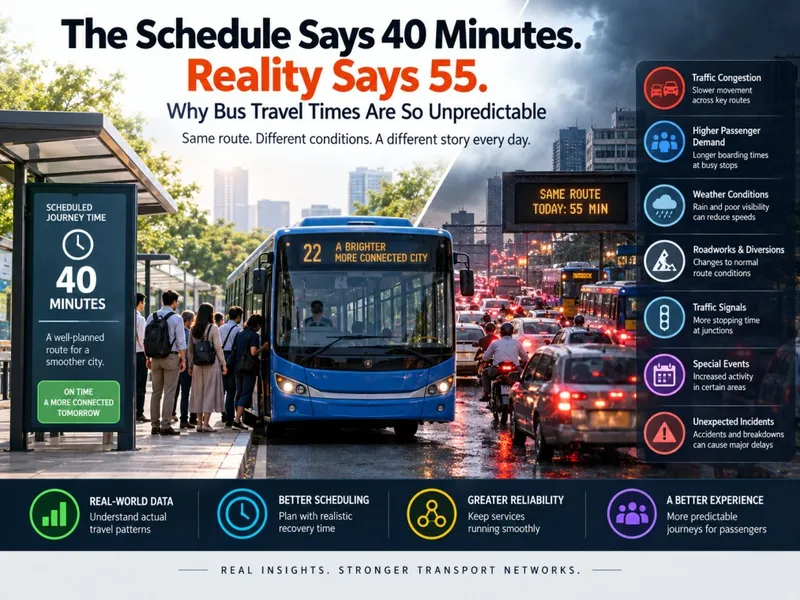
But modern cities don’t behave like that anymore. Traffic conditions change hour by hour. A minor incident can slow an entire corridor. A signal breakdown can create a bottleneck in minutes. And a public bus, no matter how well planned its route is, becomes inefficient the moment it gets trapped inside that congestion.
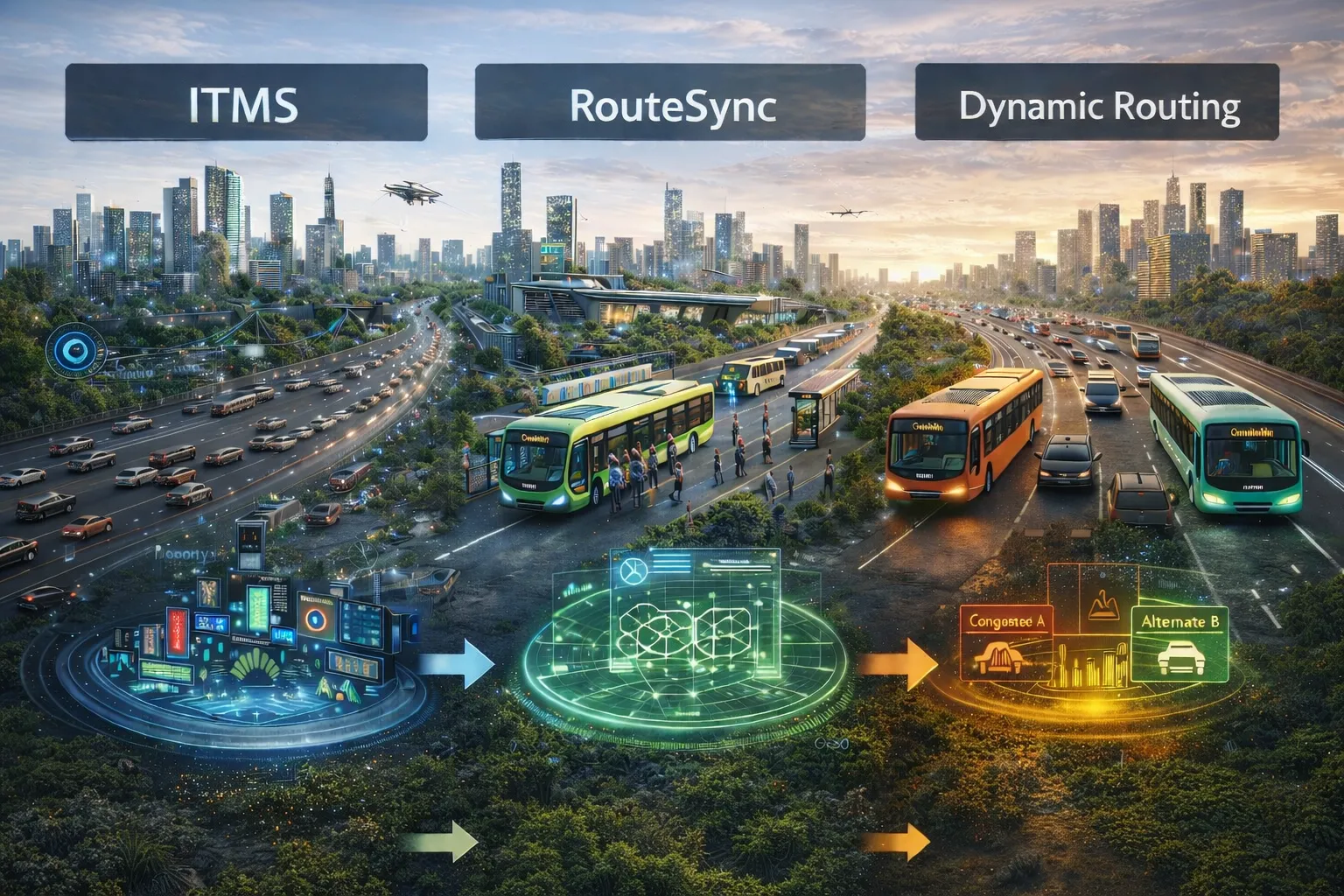
This is why the future of public transport is not just better buses or better roads—it’s smarter decision-making in real time. And that future becomes possible when route optimization platforms (like RouteSync) work alongside traffic intelligence systems (like ITMS).
Why Static Routes Are Becoming a Limitation
Most city bus routes today are built around a fixed logic: this route runs through these roads, at these times, every day. Even when conditions change — roadworks, a festival crowd, a sudden congestion surge — the route stays the same.
That rigidity creates problems operators know too well:
- buses lose time sitting in traffic
- schedule reliability drops
- fuel consumption rises
- passengers get frustrated
- and overall service efficiency declines
What makes this worse is that congestion doesn’t just slow buses—it breaks the entire system. A delayed bus affects the next trip, causes bunching, and creates uneven passenger loads across a corridor.
Cities have tried to solve this by adding more buses, increasing frequency, or building new infrastructure. But those steps are expensive. And they still don’t solve the real issue: routes and operations are not responding to live conditions.
What Real-Time Traffic Intelligence Adds to Public Transport
This is where ITMS plays an important role.
ITMS systems continuously monitor traffic conditions through cameras, sensors, and network-level analytics. They can identify congestion buildup, incidents, blocked lanes, or slow-moving corridors as they happen.
In most cities, that information stays inside the traffic department. It influences signals and incident response, but it rarely reaches public transport operations in a way that affects routing. And that’s the missed opportunity.
Because when bus operators can see what ITMS sees, they can stop operating blindly. They can make smarter choices about where and how buses move.
When Route Optimization Meets Traffic Intelligence
Route optimization platforms like RouteSync, built by Arena Softwares, focus on designing efficient routes, balancing demand, and reducing wasted kilometres. They help cities plan smarter networks — feeders that make sense, bus routes that are rationalized, and scheduling that matches real passenger movement.
But when RouteSync is combined with real-time ITMS data, route optimization becomes something more powerful: dynamic routing.
Instead of designing routes once and running them unchanged, the system can adapt.
A bus doesn’t have to remain stuck on an over-congested corridor just because “that’s the route”. If ITMS detects congestion ahead, RouteSync can recommend a practical alternative path or adjust the route flow for that time window — while still ensuring stops are covered, and schedules remain realistic.
This is what adaptive public transport looks like: not chaotic, not random, but intelligently flexible.
What Dynamic Routing Could Look Like in Real Life
Imagine a busy city corridor during morning peak hours. ITMS detects rising congestion near a junction due to a minor crash. Normally, buses would enter the corridor and lose 20–30 minutes.
But in an integrated system:
- ITMS flags the congestion early
- RouteSync receives the live update
- The system evaluates alternative corridors in real time
- Buses are guided through routes that avoid the bottleneck
- ETAs update automatically for passengers and control rooms
The result is simple: buses keep moving, schedules stay closer to plan, and passengers spend less time waiting or stuck.
This doesn’t require building new roads. It requires better coordination between the systems we already have.
Efficiency Gains That Operators Actually Feel
When buses avoid congestion intelligently, it improves operations in ways that matter:
- Lower fuel consumption because buses spend less time idling
- Reduced travel time variability, meaning schedules become more reliable
- Fewer delays and bunching, improving corridor performance
- Better fleet utilization, since buses complete trips faster
- Higher passenger confidence, because ETAs become predictable
These aren’t abstract benefits. They directly reduce operating costs and improve service quality.
And because public transport becomes more reliable, more people choose it, which reduces private vehicle usage and helps the city long term.
A Real Sustainability Impact: Reduced Emissions Without Big Infrastructure
Most sustainability discussions focus on switching to EV fleets, which is valuable but expensive and time-consuming. Dynamic routing offers a sustainability win immediately, even with existing fleets.
When a bus avoids congestion:
- It reduces idling
- It reduces stop-start driving
- It travels fewer wasted kilometres
- and it emits less per passenger trip
In other words, better routing reduces emissions without needing to change the vehicle itself.
This is exactly the kind of practical sustainability improvement cities need—especially those aiming for cleaner air and lower congestion without endless road expansion.
The Arena Softwares Vision for Smarter Mobility
At Arena Softwares, the goal behind RouteSync has always been bigger than route planning alone. RouteSync is designed to help cities move toward intelligent, connected mobility — where data is not trapped inside separate departments.
When RouteSync integrates with ITMS feeds, cities gain a unified system where:
- traffic intelligence informs public transport operations
- route optimization responds to real conditions
- commuters see reliable ETAs and smoother journeys
- operators reduce cost and increase efficiency
- and sustainability goals become easier to achieve
This is the future of urban mobility: not just smarter buses, but smarter networks.
Conclusion
Fixed routes helped cities build public transport networks. But fixed routes alone cannot solve modern congestion.
The next leap comes when route optimization meets real-time traffic intelligence. When platforms like RouteSync work alongside ITMS, cities can build public transport systems that adapt to reality — rerouting around congestion, improving efficiency, and reducing emissions.
Urban mobility doesn’t need to be rigid to be reliable. In fact, the future of reliable public transport will be built on one principle: the ability to adapt—intelligently, in real time.

Comments
0 messagesLeave a comment
Your email won't be published. Anonymous commenters can skip both name and email.