
Cart is empty
Sustainable Urban Transport Begins with Smarter Feeder Networks
09/12/2025
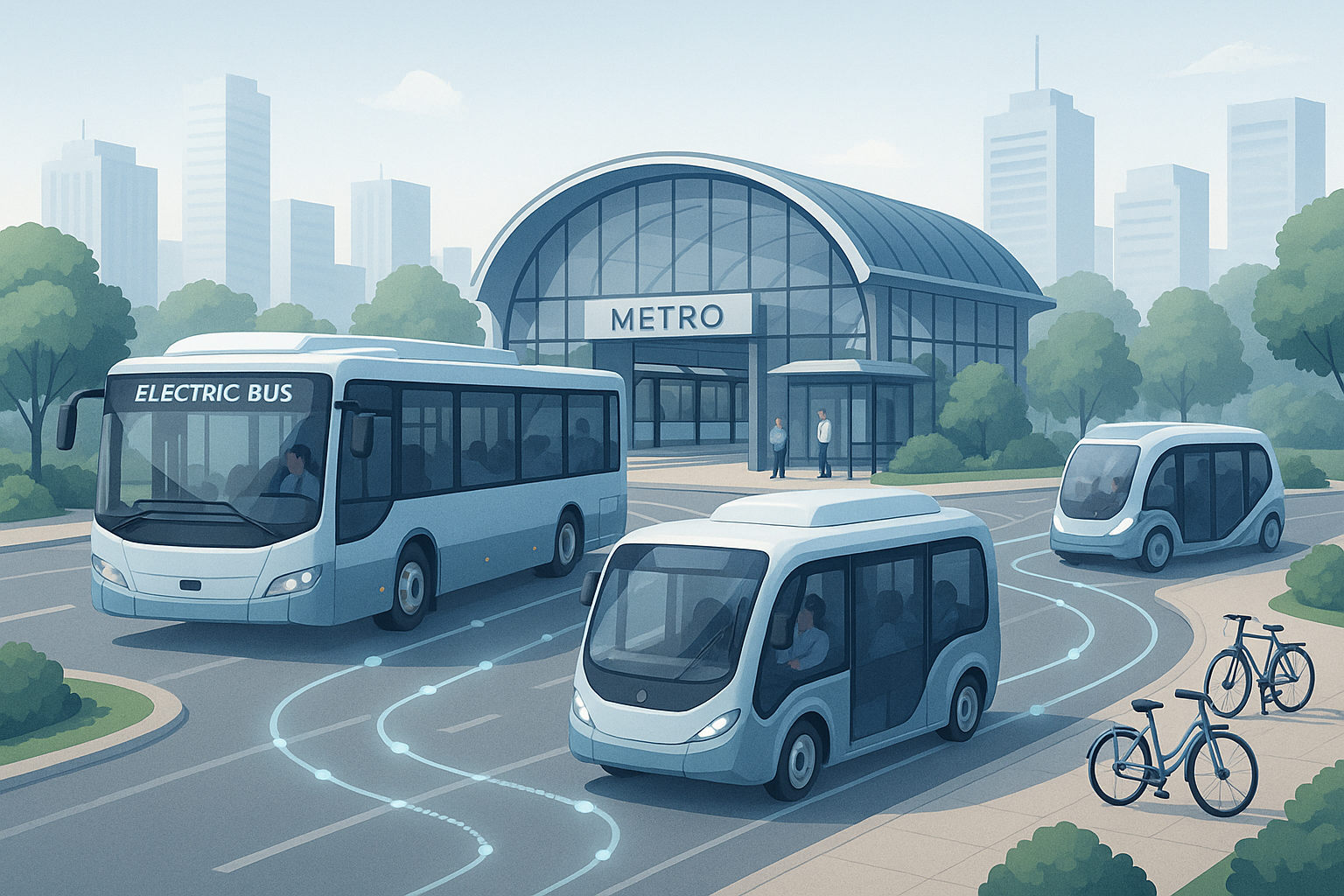
When we talk about creating a cleaner, greener city, the conversation almost always jumps straight to big projects — electric buses, metro expansions, bike lanes, and futuristic mobility ideas. These things are important, of course. But the everyday reality is this: most people decide whether they’ll use public transport based on something far simpler.
Can they easily reach it?
For millions of commuters, their day starts not at the metro station or the main bus corridor, but with the small feeder bus that takes them there. And if that first-mile experience is slow, unreliable, or confusing, no amount of investment in metro lines or express buses will convince them to switch from cars.
This is why the journey to sustainable urban transport doesn’t actually begin with megaprojects — it begins with the neighbourhood feeder route.
Feeder Networks: The Real Gatekeepers of Public Transport
A commuter’s decision to use public transport is surprisingly emotional.
If reaching the nearest transit hub feels like a struggle… if the feeder bus shows up half empty one day and overcrowded the next… if the route doesn’t make sense anymore…
They simply give up and choose convenience over sustainability.
It’s not that they don’t want to use public transport—it’s that the system doesn’t show up for them in the moments that matter.
A strong feeder network, on the other hand, makes everything else easier:
- shorter walking distances
- predictable pickup times
- smoother transfers
- fewer excuses to grab the car keys
Fix the feeders, and you instantly make the entire city’s transport system healthier.
How Better Feeder Planning Supports a Greener City
A well-designed feeder network quietly does the work that most cities loudly claim in their sustainability plans. Here’s how:
1. Fewer Wasteful Kilometres = Lower Emissions
Poorly planned routes often run long stretches with barely any passengers. That’s wasted fuel, wasted money, and unnecessary emissions. With smarter tools like RouteSync, these routes get a reality check. Cities can see where people actually board, which stretches are underused, and how to shorten or adjust routes without reducing service quality. Cleaner routes naturally lead to cleaner air.
2. Better Connectivity Encourages People to Leave Cars at Home
If a feeder shows up on time…
If the route feels logical…
If the walk to the stop isn’t a workout…
Commuters are far more likely to choose public transport over private vehicles. And every rider who switches from a car to a bus or train reduces congestion and pollution in a meaningful way.
3. Smarter Frequencies = Less Idling, Less Traffic
One of the biggest hidden sources of emissions in cities is idle buses burning fuel in traffic or waiting at long loops. With demand-based planning — something RouteSync excels at — agencies can adjust frequency based on actual need. Not guesswork. Not outdated surveys. Actual behaviour. This reduces empty or half-empty runs and ensures buses move when people actually need them.
Why Simulation Makes All the Difference
Most cities want to improve their feeder networks—they just don’t want to take blind risks. Changing a route affects thousands of daily routines. What if the new plan doesn’t work? What if people stop using the service? This is where RouteSync adds tremendous value.
Before a single bus is reassigned, the system can simulate:
- how ridership will shift,
- how much fuel can be saved,
- how travel time will change,
- and what emissions can be avoided.
It’s like being able to test-drive an entire transit network without disrupting anyone’s commute. With this level of visibility, decisions become easier — and smarter.
A Policy Tool, Not Just an Operational Upgrade
Well-designed feeder networks shouldn’t be treated as an afterthought. They’re not just a logistical detail — they’re a policy instrument.
Strong feeders help cities:
- reduce overall traffic,
- lower emissions in residential zones,
- improve access to public transport for underserved communities,
- and make expensive metro or BRT systems actually pay off.
When the feeders are weak, even the best infrastructure stands half-empty. When the feeders are strong, everything else clicks into place.
Arena Softwares: Supporting Cities in Building Smarter, Cleaner Routes
At Arena Softwares, we built RouteSync because cities don’t just need new buses—they need better ways to use the ones they already have.
RouteSync helps:
- identify real commuter demand,
- redesign routes with purpose,
- run simulations before making changes,
- monitor performance live,
- and continuously refine feeder networks based on real data.
It gives planners the confidence to make decisions that matter — not just for efficiency, but for sustainability and quality of life. A cleaner city isn’t built overnight. But it does begin with better routes, better planning, and a system that listens to the people who use it.
A Greener Urban Future Starts on the Smallest Roads
Sustainability doesn’t begin with grand announcements.
It begins with small, consistent improvements — especially on the roads where commuters take their first steps into the public transport system. Smarter feeder networks are one of the simplest, most impactful steps a city can take to reduce traffic, cut emissions, and make clean mobility genuinely accessible. And with RouteSync from Arena Softwares, cities finally have the technology to make that shift happen.
126
 Facebook
 Instagram
 LinkedIn
 YouTube