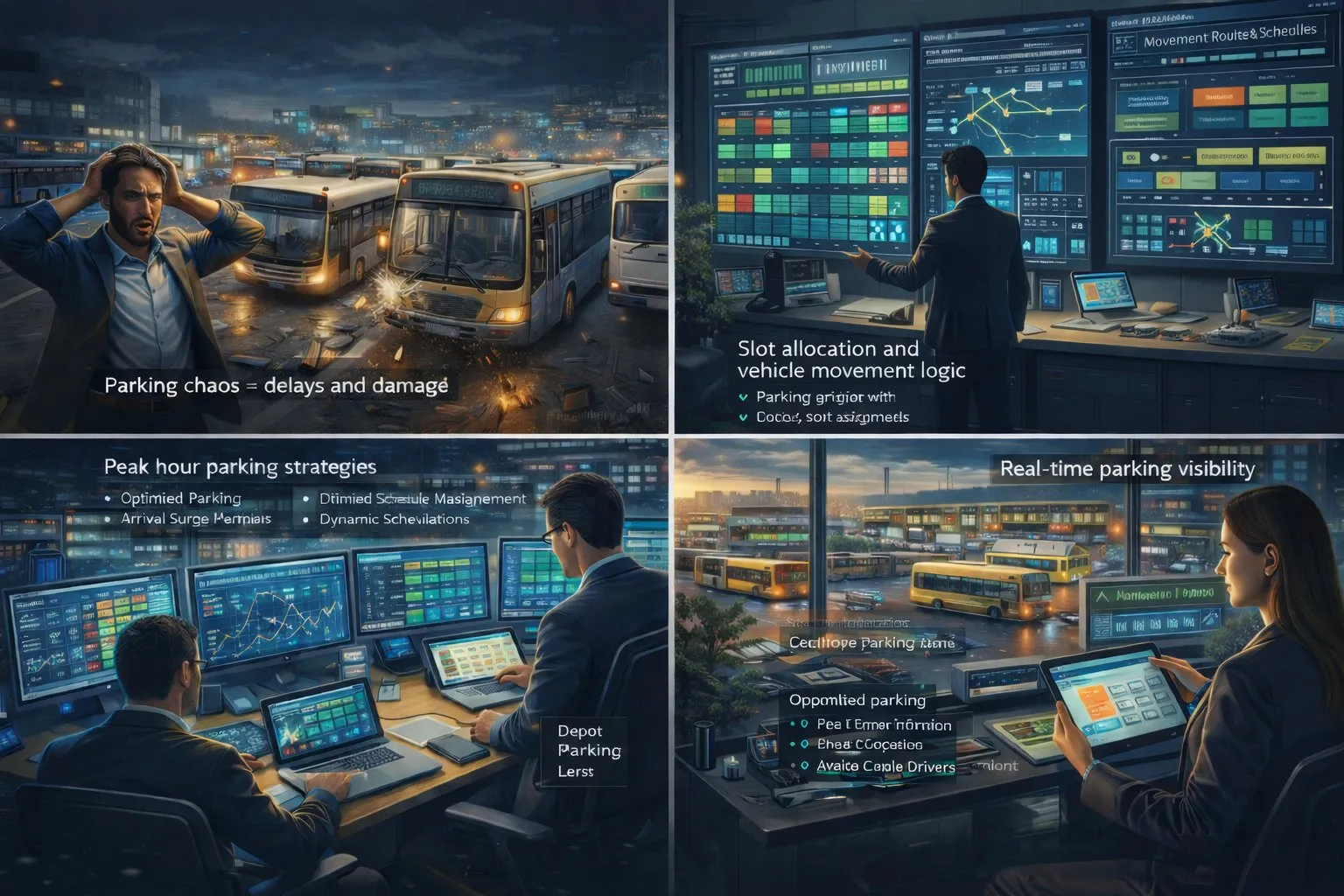
When people talk about improving public transport, the conversation usually revolves around routes, new buses, or passenger technology. Depot parking rarely comes up.
But if you spend even a few mornings inside a busy bus depot, you’ll quickly realize how important parking really is.
The first departures of the day often depend on something very simple: whether the right bus can leave the yard on time. If vehicles are parked randomly or blocked by others, drivers spend valuable minutes repositioning buses before service even begins. That small delay can easily spread into the day’s schedule.
This is why smart parking for bus depots and terminals is becoming an important focus for modern transit operators. A well-planned parking system doesn’t just organize space—it helps vehicles move efficiently, reduces operational delays, and makes depot management far easier.
The Real Problem with Unstructured Depot Parking
In many depots, parking is managed informally. Buses return from service and are parked wherever space is available. At night, this may seem manageable because there is little activity in the yard.
The real challenge appears early the next morning.
Imagine a bus that needs to leave first for the morning shift. If that vehicle is parked behind two others, the driver has to move them before leaving. Multiply that situation across several vehicles, and suddenly dispatch teams are struggling to keep departures on schedule.
This kind of parking congestion also increases the chances of minor accidents. Tight maneuvering, unclear vehicle paths, and rushed movements inside the yard often lead to small collisions or mirror damage.
Individually, these incidents might seem minor. But over time they affect both operational efficiency and maintenance costs.
Parking Should Follow Operations, Not Convenience
A smarter approach to depot parking starts with a simple idea: buses should be parked based on how they will be used next.
Vehicles scheduled for early departures should be positioned close to exit lanes. Buses returning from late-night service should be parked with the next day’s dispatch plan already in mind.
This kind of planning makes the morning dispatch process far smoother. Drivers don’t need to move multiple vehicles before leaving, and supervisors can easily track which buses are ready for service.
The design of vehicle movement paths inside the depot also matters. Clear entry and exit routes reduce unnecessary maneuvering and help drivers navigate the yard safely.
Modern depot tools such as ParkFinder from Arena Softwares help operators organize parking slots digitally, allowing vehicles to be assigned to specific spaces depending on their upcoming trips.
Managing Parking During the Busiest Depot Hours
Depots are usually busiest at two times of the day: early morning when vehicles leave for service and late evening when they return.
During these windows, dozens of buses may be moving through the yard within a short period of time. Without a structured parking layout, that activity can quickly turn chaotic.
One practical strategy is to divide the depot into parking zones. Vehicles serving high-frequency routes or early departures can be parked closer to exit points, while buses scheduled later in the day can occupy deeper areas of the yard.
Separating spare vehicles, feeder buses, and long-route services into different sections can also improve vehicle flow inside the depot.
These adjustments may sound simple, but they often make a noticeable difference in how smoothly the depot operates.
Why Visibility Inside the Depot Is So Important
Another challenge depot managers often face is simply locating vehicles.
In large depots, it’s not always easy to know which parking slots are available or exactly where a particular bus is parked. Drivers returning from service may circle the yard searching for space, while supervisors try to track vehicle readiness for the next shift.
Having real-time parking visibility changes that experience completely.
When depot teams can see available parking slots and vehicle positions instantly, the entire yard becomes easier to manage. Incoming buses can be directed to the right location, and dispatch teams can quickly confirm whether vehicles are ready for service.
Solutions like ParkFinder, powered by Arena Softwares, provide this visibility by digitally mapping depot layouts and tracking vehicle placement in real time.
Why Smart Parking Is Becoming Essential for Modern Transit
As cities expand their public transport networks, depots are handling larger fleets and more complex operations than ever before. Parking management can no longer rely on informal practices alone.
Well-organized depot parking helps operators achieve several important outcomes:
- Faster vehicle dispatch during peak hours
- Reduced congestion inside depot yards
- Lower risk of vehicle damage
- Better use of available parking space
- Improved oversight for depot supervisors
- Improved oversight for depot supervisors
In other words, parking may happen behind the scenes, but it directly supports reliable transit service.
A Small Change That Improves the Entire Operation
When parking inside a depot is structured properly, many everyday operational problems simply disappear. Vehicles leave on time, drivers spend less time maneuvering buses, and supervisors gain clearer control over fleet readiness.
For transit agencies looking to improve efficiency, smart depot parking is often one of the most practical improvements they can make.
Solutions like ParkFinder from Arena Softwares are helping transport operators bring structure to depot parking by combining parking slot management, vehicle visibility, and operational planning in one platform.
If your depot struggles with parking congestion or dispatch delays, request a parking optimization assessment from Arena Softwares to see how smarter parking layouts and real-time parking visibility can improve depot operations.


Comments
0 messagesLeave a comment
Your email won't be published. Anonymous commenters can skip both name and email.