
Cart is empty
Integrating ITMS with Public Transport Operations: A Unified Urban Mobility Vision
19/12/2025
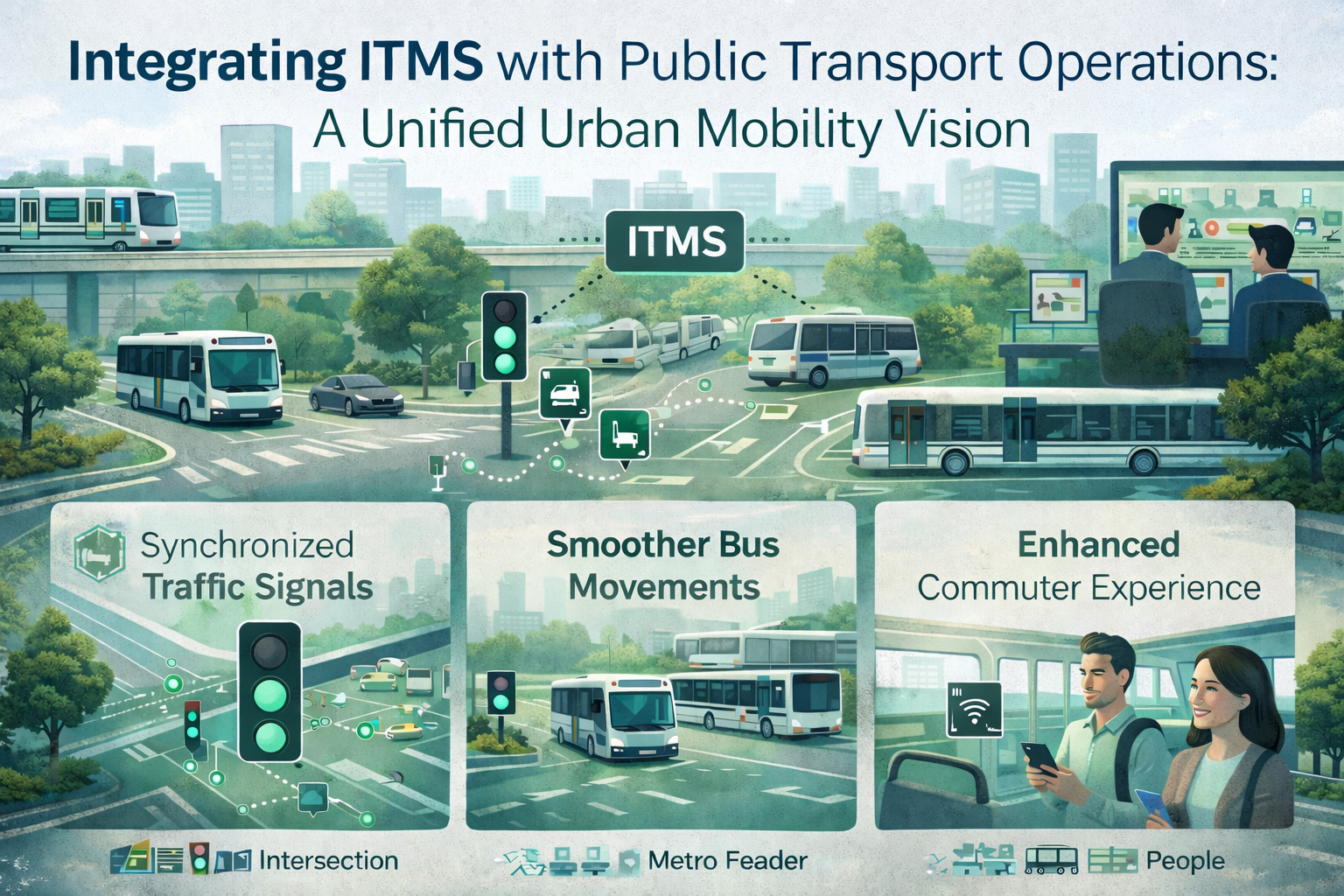
In most cities, traffic systems and public transport still live in separate worlds. Traffic signals are managed one way, buses and shuttles another, and feeder services often operate on fixed schedules regardless of what’s happening on the road.
For commuters, this separation is easy to feel. Buses get stuck at red lights. Feeder shuttles arrive late at metro stations. Transfers feel rushed or poorly timed. And over time, people lose confidence in public transport—not because the system is bad, but because it isn’t coordinated.
This is where integrating Intelligent Traffic Management Systems (ITMS) with public transport operations starts to matter. Not as a technical upgrade, but as a practical way to make daily travel smoother and more predictable.
Why Coordination Matters More Than Capacity
Most cities already have buses, signals, and transit infrastructure in place. The real issue isn’t the lack of assets—it’s the lack of coordination between them.
A bus running five minutes late because it hit three red lights in a row doesn’t just affect that trip. It affects the next service, the passengers waiting at the stop, and the feeder connection it was supposed to meet. These small delays stack up quickly.
When ITMS is connected with public transport operations, traffic systems stop treating buses like just another vehicle. Instead, they begin to recognise buses as high-impact movers that deserve smoother passage through busy corridors.
Smart Intersections That Help Buses Keep Moving
One of the most immediate benefits of integration shows up at intersections.
When traffic signals are aware of approaching buses, small adjustments can make a big difference. A green light can be held a few seconds longer. A red phase can be shortened slightly. The bus clears the junction instead of stopping, and the journey stays on track.
These changes don’t disrupt overall traffic when managed properly. In fact, they often improve flow by reducing unnecessary stopping and bunching.
Arena Softwares supports this kind of intelligent coordination through platforms like RouteSync, which help cities align signal behavior with real-time transit movement rather than relying only on fixed plans.
Feeder Services That Actually Match Reality
Feeder buses and shuttles play a critical role in public transport, but they are often the first to suffer when traffic conditions change. A delayed feeder can mean a missed metro connection, which quickly turns into frustration for commuters.
When ITMS is integrated with feeder operations, traffic conditions become part of daily planning. Feeder routes and timings can respond to congestion patterns, and signal priority can be applied near stations or transfer points where timing matters most.
With RouteSync, Arena Softwares helps bring feeder data and traffic intelligence together. Instead of running purely on static schedules, feeder services can adapt to what’s happening on the road—making connections more reliable and reducing waiting time for passengers.
Using Transit Data to Make Smarter Traffic Decisions
Public transport systems generate a lot of useful information: vehicle locations, schedules, dwell times, and peak demand periods. When this data is shared with ITMS platforms, traffic control becomes far more informed.
Knowing that several buses are approaching a busy corridor allows traffic teams to prepare signal strategies in advance. Understanding peak boarding times near stations helps prevent congestion from spilling back into surrounding streets.
This kind of two-way data sharing—where traffic informs transit and transit informs traffic—is where integration really starts to pay off.
Arena Softwares focuses on enabling this shared visibility, so traffic and transit teams aren’t working with separate dashboards and disconnected information.
What Commuters Actually Notice
Most commuters don’t think about ITMS or signal strategies. They notice outcomes.
They notice buses arriving closer to schedule. They notice fewer long stops at intersections. They notice smoother transfers between feeders and main services.
When public transport feels coordinated, people trust it more. And when people trust it, they use it more. That shift has a real impact on congestion, emissions, and overall city movement.
How Arena Softwares Fits Into the Bigger Picture
Arena Softwares approach to urban mobility is as a connected system, not a set of isolated components. With RouteSync, the goal is to help cities bring traffic management and public transport operations onto the same page.
By integrating ITMS capabilities with bus, shuttle, and feeder systems, RouteSync helps cities:
- Give buses smoother movement through key corridors
- Align feeder services with real traffic conditions
- improve reliability without adding more vehicles
- create a more consistent experience for commuters
It’s less about “optimising” everything and more about making systems work together sensibly.
A More Connected Way Forward
Cities don’t need entirely new transport systems to improve mobility. Often, they just need their existing systems to talk to each other.
Integrating ITMS with public transport operations is one of the most effective ways to do that. When traffic signals, buses, feeders, and data platforms work in sync, movement across the city becomes smoother, more reliable, and far less stressful.
With solutions like RouteSync, Arena Softwares helps cities move toward this unified mobility vision—where traffic management supports public transport, and public transport helps ease traffic, rather than the two competing for road space. A connected system moves better. And integration is where that connection begins.
134
 Facebook
 Instagram
 LinkedIn
 YouTube