
Cart is empty
From Reactive to Proactive: How ITMS Transforms Urban Traffic Control
16/12/2025
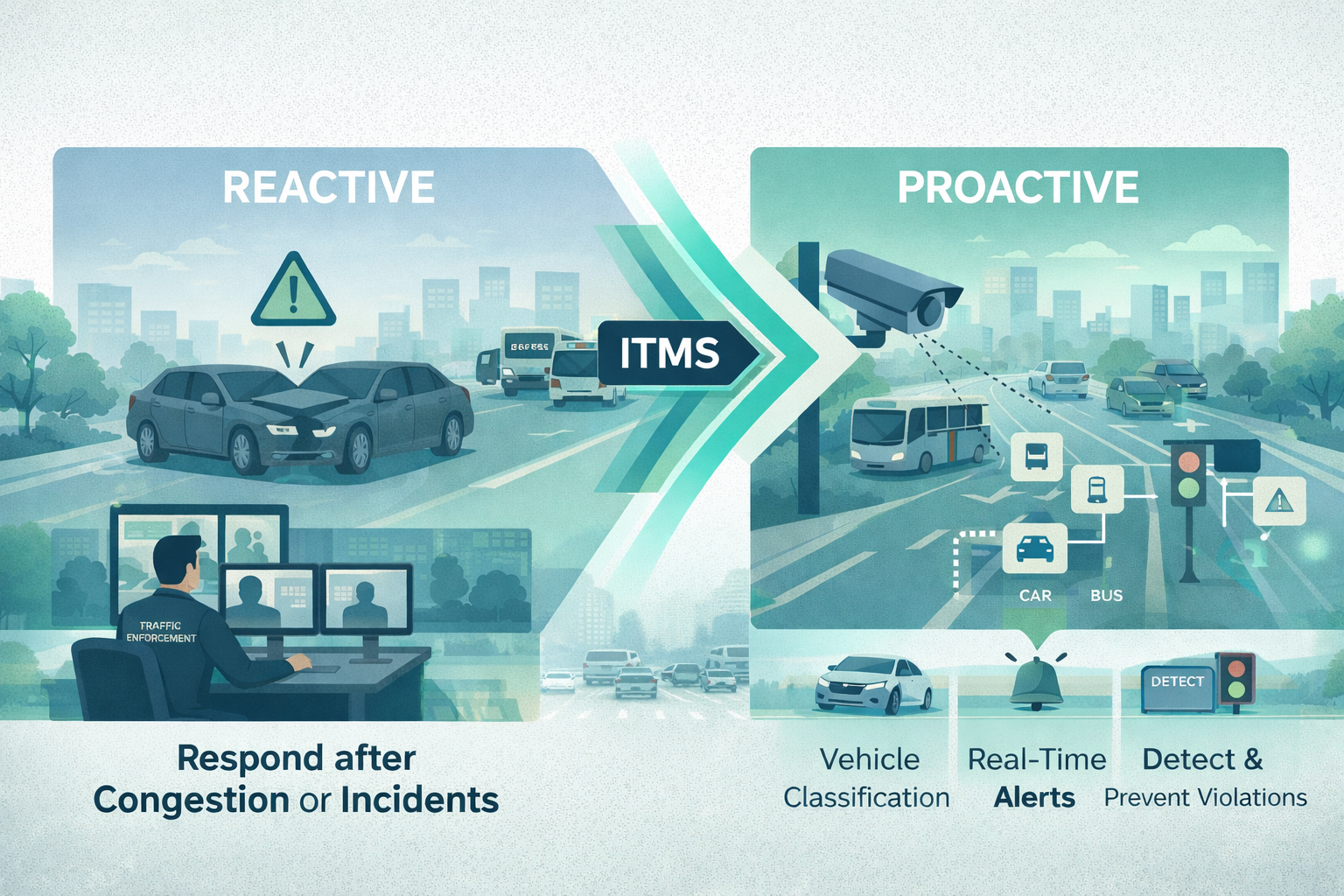
For years, traffic control in cities worked on a simple rule: wait until something goes wrong, then try to fix it. A junction backs up, an accident is reported, or congestion becomes obvious on camera screens — and only then does the control room step in.
That approach wasn’t careless. It was simply the best cities could do with limited visibility and rigid systems. But as traffic volumes grew and patterns became more unpredictable, reacting after the fact stopped being enough. By the time action was taken, congestion had already spread, and recovery became slow and frustrating.
This is where Intelligent Traffic Management Systems, or ITMS, have started to change the way cities manage traffic—not by eliminating problems, but by helping teams respond earlier and more intelligently.
Understanding Traffic Before It Breaks Down
Traffic rarely collapses all at once. It builds up quietly. Vehicles begin slowing a little earlier than usual. Queues grow unevenly. One approach at a junction starts behaving differently from the rest. These early signals are easy to miss when systems rely on fixed signal plans or manual observation.
ITMS continuously looks at live data from cameras, sensors, and traffic feeds to spot these subtle changes. Instead of waiting for gridlock, traffic teams can see pressure building while there’s still time to act.
A small adjustment made early — extending a green phase, balancing flow across nearby routes, or easing congestion at a key junction — can prevent a much larger problem later. For commuters, it doesn’t feel like an intervention at all. It simply feels like traffic wasn’t as bad as expected.
At Arena Softwares, this proactive thinking is supported through platforms like RouteSync, which help traffic teams connect live data with real operational decisions, rather than treating each alert or junction in isolation.
Signals That Respond to Real Life, Not Old Assumptions
Traditional traffic signals are often based on historical averages — what traffic looked like months or years ago. But real roads don’t follow averages. Weather, events, incidents, and daily demand shifts constantly change how vehicles move.
With ITMS, signals become responsive. If one approach starts filling up faster than usual, it gets more green time. If another side clears quickly, time is adjusted. The system adapts to what’s happening now, not what was planned earlier.
RouteSync adds value here by helping teams see the bigger picture. Instead of adjusting one junction and unintentionally pushing congestion downstream, traffic managers can coordinate signal behaviour across an entire corridor. The focus shifts from fixing isolated points to managing flow as a connected system.
Better Decisions in the Control Room, When Time Matters
Traffic control rooms are high-pressure environments. Operators are expected to make quick decisions while monitoring large volumes of information. One of the biggest challenges has always been knowing what to act on first.
ITMS helps by turning raw data into meaningful insight. Instead of watching endless screens, operators see where conditions are changing and why it matters. RouteSync strengthens this further by providing context — how one issue affects nearby roads and what options are available.
This doesn’t replace human judgment. It supports it. Decisions become faster, calmer, and more confident because they’re based on live conditions, not guesswork.
Helping Emergency Vehicles Move Without Delay
Few situations highlight the limits of reactive traffic control more clearly than emergency response. Ambulances, fire engines, and police vehicles often lose critical minutes navigating congested roads, especially during peak hours.
ITMS supports emergency vehicle prioritization by dynamically adjusting traffic signals along the vehicle’s route. Green phases are extended, cross traffic is briefly held, and intersections clear safely as the vehicle approaches.
When combined with RouteSync, this prioritization works at a corridor level rather than one junction at a time. Signals coordinate with each other, allowing emergency vehicles to move smoothly instead of stopping repeatedly. Those saved minutes can make a real difference.
A Quieter Improvement That People Still Feel
The most important impact of ITMS isn’t dramatic. It’s consistent. Congestion doesn’t disappear, but it becomes more manageable. Incidents still happen, but recovery is quicker. Emergency vehicles still share the road, but they face fewer obstacles.
Cities using proactive traffic management experience:
- smoother daily traffic flow
- faster response to incidents
- improved emergency vehicle movement
- better use of existing infrastructure
Most of this happens quietly in the background. When systems work well, people don’t think about traffic management — they just notice fewer delays and less frustration.
How Arena Softwares Supports Proactive Traffic Control
Arena Softwares builds solutions like RouteSync to help cities move beyond reactive traffic management. By connecting live data, signal coordination, and corridor-level insights, RouteSync enables traffic teams to anticipate problems, coordinate responses, and act with confidence.
Rather than focusing on one-off fixes, Arena Softwares supports a system-wide approach — one that reflects how traffic actually behaves in real life, not how it looks on static plans.
Conclusion
Traffic will always be part of city life. What changes is how well it’s managed. Reactive systems respond after problems grow. Intelligent Traffic Management Systems allow cities to stay a step ahead.
With the support of platforms like RouteSync from Arena Softwares, traffic control becomes less about chasing issues and more about managing flow — early, calmly, and effectively.
168
 Facebook
 Instagram
 LinkedIn
 YouTube