
Cart is empty
Conductor Operations Digitization: How Ticketing and Reporting Can Be Streamlined
29/01/2026
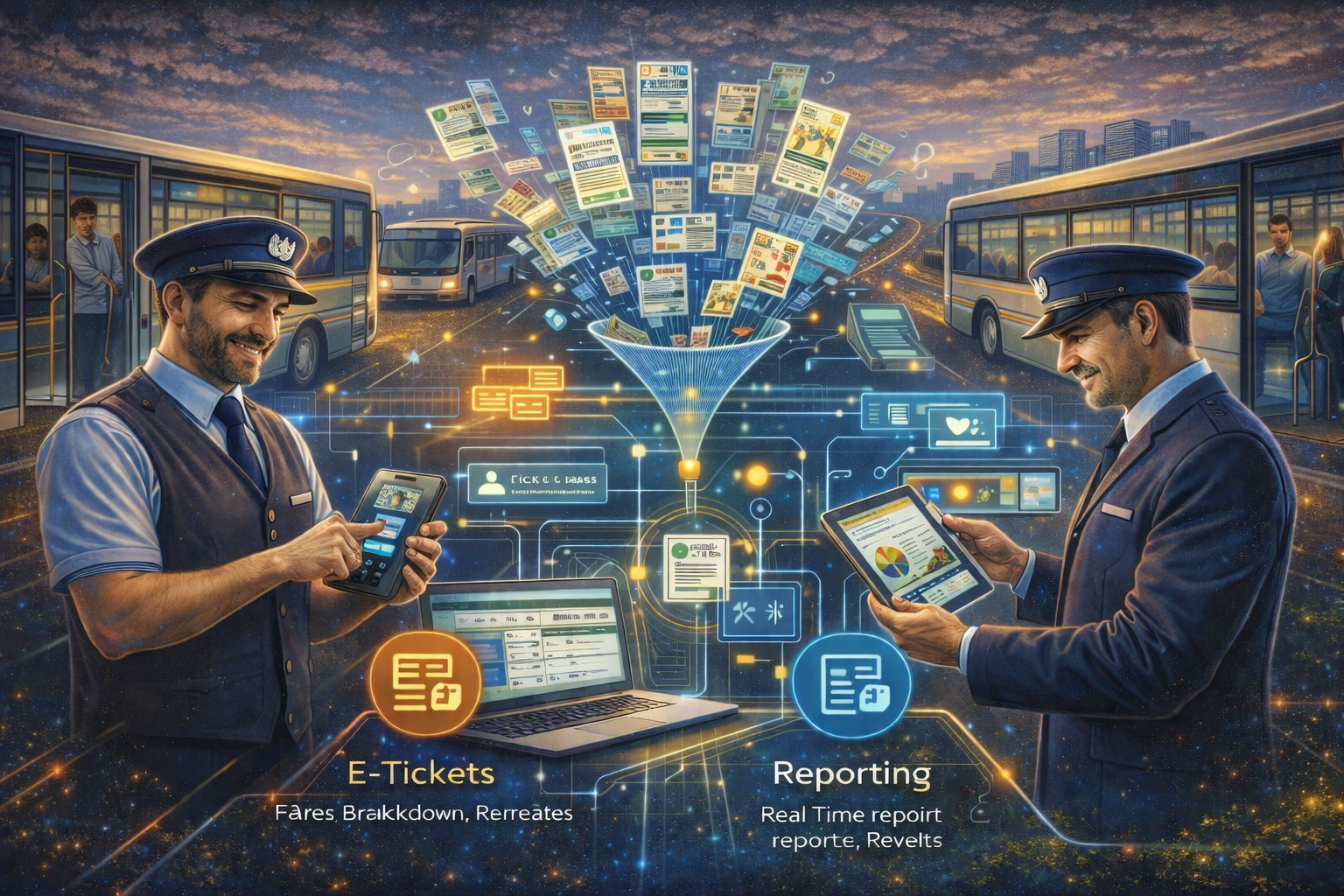
In most public transport systems, conductors are expected to manage a lot—ticketing, cash handling, passenger queries, reporting issues, and keeping trips moving—often all at the same time. Yet the systems supporting them are still largely manual or only partially digital.
This gap shows up every day on the ground. Delays at boarding, mismatched cash records, incomplete trip reports, missing passenger feedback, and long end-of-day reconciliations are not exceptions—they’re routine. And while these issues are often seen as “part of operations,” they quietly affect service quality, revenue accuracy, and accountability.
Digitizing conductor operations isn’t about adding technology for the sake of it. It’s about removing friction from the most repetitive, error-prone parts of the job so conductors can focus on running trips smoothly.
The Daily Pain Points Conductors Deal With
A conductor’s day is rarely predictable. Passenger volumes fluctuate, cash handling varies by trip, and issues arise without warning. Yet conductors are often asked to record everything manually or across disconnected systems.
Some of the most common pain points include managing cash while issuing tickets, keeping track of fare stages under pressure, handling disputes over fares, and remembering to note down issues after the trip ends. By the time reporting happens, details are either rushed or missed entirely.
There’s also the pressure of accountability. When records don’t match—whether it’s cash, tickets, or trip details—the conductor is usually the first one questioned, even when the root cause is a system limitation.
Digitization helps by reducing reliance on memory and manual recording. When ticketing, cash collection, and trip data are captured as part of the workflow, accuracy improves naturally.
Digital Cash Handling and Clear Audit Trails
Cash handling is one of the most sensitive parts of conductor operations. Even small mismatches can create tension, audits, and mistrust. Manual cash logs, delayed reconciliations, and unclear summaries make it difficult to know where issues actually occurred.
Digital cash tracking changes this dynamic. When each transaction is logged at the point of ticketing, the system automatically creates a clear audit trail. Conductors don’t have to remember totals or reconcile everything from memory at the end of the shift.
What matters most here is simplicity. If the system is easy to use during live boarding, conductors adopt it quickly. Over time, this reduces disputes, speeds up audits, and builds trust between field staff and back-office teams.
This is one of the areas where ConductorPro by Arena Softwares plays a practical role—bringing ticketing and cash records into a single, verifiable flow.
Trip-Level Reconciliation Without the End-of-Day Stress
End-of-day reconciliation is often where small issues turn into big ones. Tickets issued, cash collected, passengers carried, and trips completed all need to line up—and when they don’t, it usually means extra work for both conductors and supervisors.
Trip-level reconciliation makes this easier by tying data directly to each trip instead of treating the entire shift as one lump sum. When ticketing data, cash collection, and trip completion details are linked automatically, discrepancies become easier to identify and resolve.
Instead of asking, “What went wrong today?”, teams can ask, “What happened on this specific trip?” That shift alone saves time and reduces friction.
ConductorPro supports this by structuring data around trips, not just shifts, making reconciliation more transparent and manageable.
Passenger Feedback Logging That Doesn’t Get Lost
Passengers often share feedback directly with conductors—complaints about overcrowding, fare confusion, cleanliness, or service delays. In most cases, this feedback never makes it into the system. It either stays verbal or gets noted down informally, if at all.
Digital feedback logging gives conductors a simple way to record issues as they happen, without disrupting service. Over time, this builds a valuable picture of recurring problems on specific routes or time slots.
More importantly, it closes the loop. When feedback is logged consistently, operations teams can act on patterns instead of reacting to isolated complaints.
This is another area where digitization adds value—not by increasing workload, but by making reporting easier and more consistent.
Why Conductor Digitization Matters More Than Ever
As public transport systems move toward real-time monitoring and performance-based operations, conductor data becomes increasingly important. Ticketing accuracy, revenue visibility, passenger experience, and service accountability all depend on what happens on board.
When conductor operations remain manual, the system relies heavily on after-the-fact corrections. When they’re digitized properly, issues are captured early, reporting becomes cleaner, and daily operations run with less friction.
Conductor digitization is not about replacing people—it’s about supporting them with tools that reflect how the job actually works.
Closure
Conductor operations sit at the heart of daily service delivery. When ticketing, cash handling, trip reporting, and passenger feedback are managed through disconnected or manual processes, small issues quietly grow into operational problems. ConductorPro, powered by Arena Softwares, is designed to simplify this reality—bringing ticketing, cash records, trip reconciliation, and feedback logging into one easy-to-use workflow. If you want better revenue clarity, cleaner reporting, and smoother day-to-day operations, improving conductor workflows is one of the most effective places to start.
Try a ConductorPro workflow demo and see how digitized conductor operations can reduce friction, improve accuracy, and strengthen on-ground accountability.
104
 Facebook
 Instagram
 LinkedIn
 YouTube