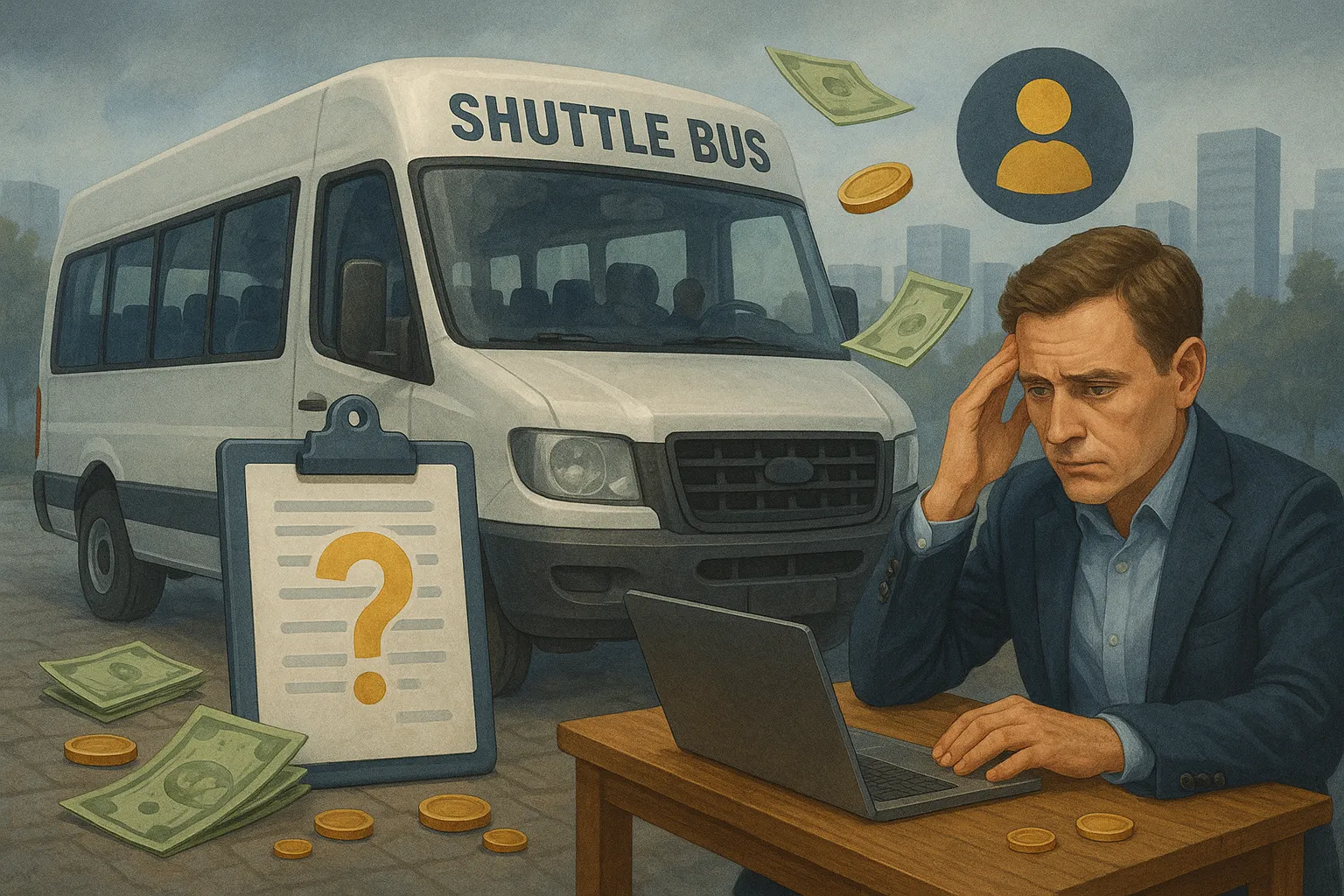
Walk into almost any corporate parking lot around 8 AM or 6 PM, and you’ll notice something interesting: long shuttle buses lined up, engines running, doors open, and only a handful of employees boarding. What was once introduced as a convenient, cost-effective transport solution often ends up running half-filled, following the same old schedules and routes, day after day.
Most companies don’t intentionally design inefficient shuttle systems. They simply inherit them. The routes are set once and then left untouched. The timing hasn’t changed for years. And the assumption is that as long as “a shuttle is available”, the job is done.
But behind this comfortable routine lies a truth most organizations don’t talk about: traditional shuttle services rarely match how employees actually travel today.
And that mismatch is costing companies far more than they realize.
Why Traditional Shuttle Services No Longer Work
A decade ago, fixed bus routes made sense. People worked in predictable shifts. They lived in the same clusters. Traffic patterns were stable. Today, almost none of that is true. Employees work hybrid schedules now. Some start early; others log off late. Many move to new residential areas. Ride-sharing has become more popular. And cities are constantly changing — new roads, new traffic hotspots, new bottlenecks.
Yet the transport system stays frozen in time.
That’s why companies end up with buses running almost empty through long, complicated routes that no longer reflect their workforce. One bus might pass through five different neighbourhoods only to pick up two people. Another may take a needless 10 km detour because that’s how the route was originally drawn.
For operators, it becomes a daily struggle: more fuel burnt, more driver hours, more maintenance, but fewer passengers. For employees, it becomes an inconvenience: long waits, mismatched timings, and complicated pickups that push them toward cabs instead. And for the company, it becomes a growing expense that doesn’t feel justified anymore.
The Cost of Idle Running: No One Notices
Idle running—buses moving without real purpose or real passengers—is one of the biggest silent expenses in enterprise transport. It happens because companies rely on fixed assumptions instead of real demand.
When no one is actually tracking who takes the shuttle and when, decisions become a guessing game. Teams end up sending out buses “just in case” or because “that’s the schedule.” And with no real data, it’s difficult to challenge or redesign a route, even when it’s clearly underperforming.
A few of the most common patterns we’ve seen include:
- Buses running at full length even when only two riders are present
- Same timings used for years, despite changing shift patterns
- Long routes are maintained even when the employee population in that area drops
- Fleets dispatched simply because the buses are available, not because they're needed
These little inefficiencies may look harmless, but together they form a very expensive problem.
How RouteSync Helps Enterprises Rethink Their Shuttle System
This is exactly the gap RouteSync was created to solve. At Arena Softwares, we wanted to design a platform that helps companies see what’s really happening with their shuttles — and then act on it. RouteSync gives enterprises the clarity they’ve been missing for years.
Instead of planning routes blindly, RouteSync analyzes real passenger demand: where employees live, what times they travel, how often they use the shuttle, and which routes are underperforming. With this information, companies can finally make informed adjustments. Routes can be shortened. Timings can be shifted. Trips can be merged. Idle segments can be removed entirely. Shuttles begin to move with purpose again.
And suddenly, the fleet starts feeling right-sized instead of oversized. The shift becomes even more powerful when demand-based scheduling comes into play. RouteSync allows companies to run shuttles only when there’s actual demand, not because the clock says so. This cuts down dramatically on empty trips and pointless kilometres.
With live tracking and analytics, transport teams can monitor efficiency in real time — seeing exactly where time is lost, where routes can improve, and how many passengers were actually on board. The result is a system that’s not just cheaper but genuinely more convenient for employees too.
It all adds up to meaningful outcomes:
- Routes become shorter and smarter
- Shuttle occupancy improves
- Fuel and maintenance costs drop
- Companies stop paying for unnecessary kilometres
Most importantly, decisions finally move away from guesswork and toward real, data-backed insights.
It’s Time to Modernize Corporate Transport
The corporate world has evolved. Employee travel habits have evolved. But most shuttle systems haven’t kept up. Half-filled buses and rigid routes are no longer acceptable in a world where flexibility is the norm.
Enterprises don’t need more shuttle buses. They need a smarter way to plan the ones they already have.
RouteSync gives companies the tools to rethink their transport systems—to make them lighter, more responsive, and far more cost-efficient.
Modernize Your Shuttle Operations With Arena Softwares
If your company’s shuttles feel outdated, half-used, or too expensive, it might be time to take a fresh look at how they’re planned. At Arena Softwares, we’re helping enterprises redesign their transport operations with smart technology that understands real demand and eliminates unnecessary running.
Let RouteSync reshape your shuttle operations into something smarter, leaner, and truly aligned with today’s workforce — only with Arena Softwares.

Comments
0 messagesLeave a comment
Your email won't be published. Anonymous commenters can skip both name and email.