
Cart is empty
Bridging the First and Last Mile: Solving the Metro Connectivity Gap
25/11/2025
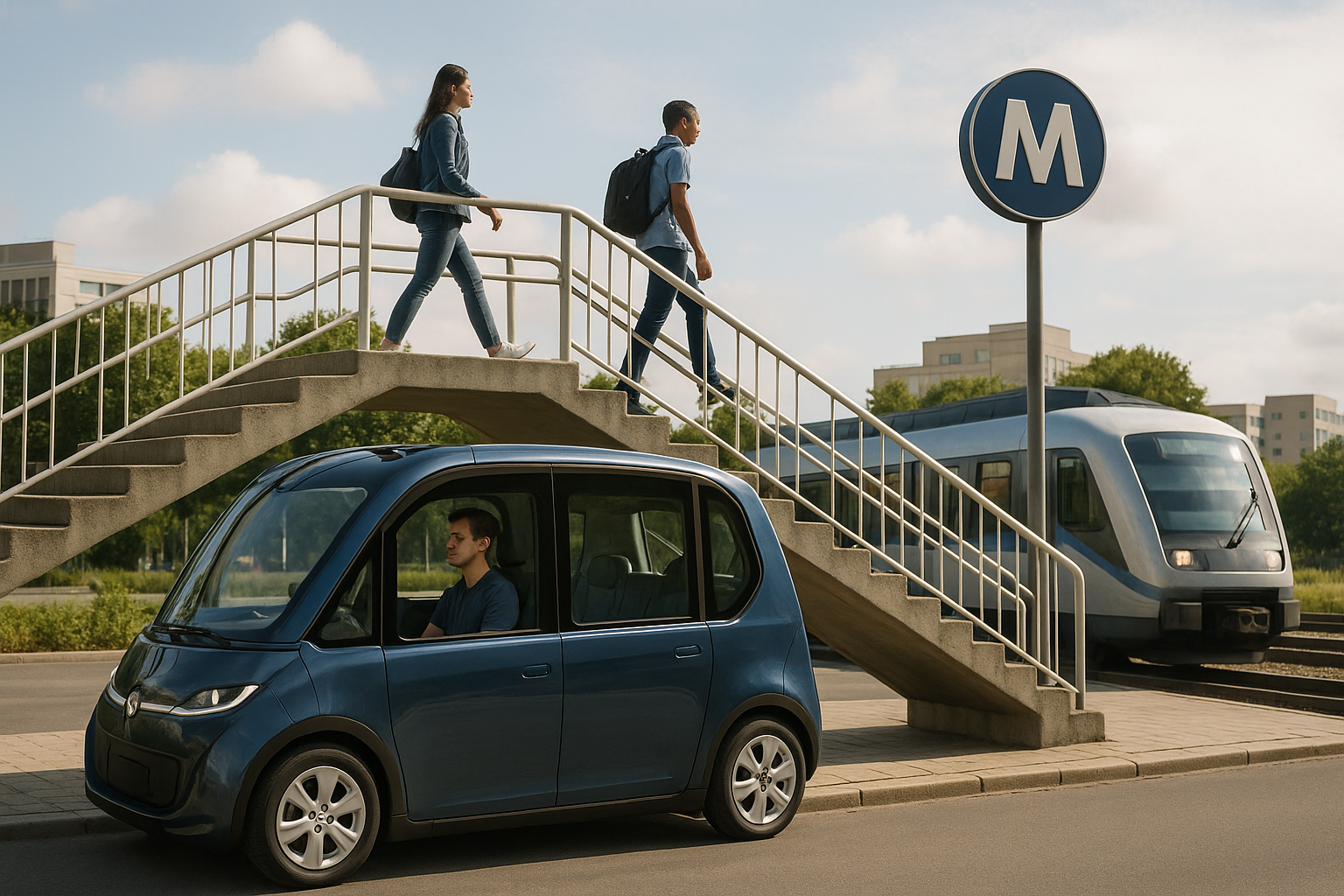
Cities today are expanding quicker than ever – vertically, horizontally, and digitally. The metros have become the lifeblood for these urban conglomerates, efficiently moving millions every day. Yet, one persistent gap continues to challenge even the most advanced networks – the first and last mile.
While the metro can take commuters across a city in mere minutes, that advantage is lost if it's cumbersome, confusing, or overly expensive to get to and from the station. Too often, this gap between home, station, and destination becomes the deciding factor in taking the metro or a personal vehicle.
The challenge isn't how many metro lines a city is building, but how those metro lines connect to people's lives.
The Connectivity Conundrum
Metro systems embody modernity – fast, clean, and reliable – in most Indian cities, but the streets outside often tell a different story. Commuters step out of sleek trains into an unkempt web of uncoordinated cars, unpredictable buses, and often-lacking pedestrian pathways. Feeder services exist, but they are not always in sync. Routes overlap or come to an abrupt end. Frequencies don’t align with metro timings. And large residential pockets remain untouched.
It has resulted in a fragmented approach, wherein the passenger journey has been divided into disconnected segments. This will lead to reduced metro ridership, increased travel time, and continuing reliance on personal vehicles, adding to congestion and pollution. The real challenge isn't about mobility alone; it's about continuity – ensuring that the journey doesn't end where the metro line does.
From Gaps to Links: The Role of Feeder Services
Feeder services are the missing links that connect metro systems to neighbourhoods. These are silent bridges between high-speed rail and the city's inner veins. When designed well, they make metros not just accessible but also irresistible.
An efficient feeder service does not just drop passengers at the station; it completes the journey. It connects homes, offices, schools, and marketplaces directly to the metro's reach, but for that, cities must move from static, guess-based planning to data-driven, dynamic route rationalisation. That's where intelligence meets infrastructure.
Data-Driven Feeder Planning: The Game Changer
Every commuter leaves behind a digital trail: a ticket swipe, GPS log, mobile signal, or card payment. Altogether, they form a powerful dataset showing how a city moves. Route optimization, for example, through platforms like RouteSync, deciphers all this into actionable insight. It checks trip density, demand clusters, and time-based travel patterns to build feeder routes that actually map commuter behaviour.
Imagine this:
• A feeder that automatically increases frequency during peak office hours.
• A neighbourhood loop that is dynamically created in response to increased demand.
• Metro schedules are in sync with last-mile arrivals – so nobody misses a train.
This isn't urban planning on paper; this is mobility designed through intelligence.
At RouteSync, data not only informs decisions but orchestrates them. Its algorithms read live trip data to identify inefficiencies and propose optimal route configurations in real time.
Here's how Routesync redefines metro connectivity:
• Trip Density Mapping: This involves the determination of the origins and destinations of commuters' trips to help route planners where demand is high.
• Overlap Elimination: It highlights multiple redundant feeder lines that save resource wastage and reduce operation costs.
• Dynamic Scheduling: This allows the timing of feeders to align with metro arrivals and departures for smooth interchanges.
• Accessibility Expansion: Pinpoints areas of least access and creates new micro-routes to involve those areas.
• Performance Analytics: It tracks the ridership, on-time performance, and cost-efficiency to ensure that every route continuously develops.
The outcome is a network where feeder, bus, and metro services function as an integrated system, not as separate, competing modes.
When Systems Think Together
A genuinely smart transport ecosystem doesn't stop at connecting routes but at connecting decisions. When feeder planning tools, metro operations, and traffic data platforms talk to each other, cities start working like one integrated organism.
Traffic sensors detect a sudden blocking of the road; RouteSync automatically reroutes feeders in mere seconds; Metro updates arrival times on display; commuters get real-time alerts. The system automatically acts long before an inconvenience could even arise. The system automatically acts much before an inconvenience could even arise. This is the power of connected intelligence, where coordination replaces chaos.
The Arena Software Vision: Seamless Mobility
At Arena Softwares, we envision the future of mobility not merely as the summation of systems but as an integrated experience. Our intelligent solutions like RouteSync cover the first and the last mile by combining technology, data, and human needs.
At Arena Softwares, we integrate GIS mapping, AI-driven analytics, and real-time IoT monitoring to help transport authorities create feeder systems that think, adapt, and perform continuously. With every passing day, each feeder route gets smarter; by design, every metro journey is smoother. We don't build just applications; we build connected mobility ecosystems that move cities forward. Because when the first and last mile are interconnected, the whole city starts moving smarter.
Towards a Connected Urban Future
The future of metro connectivity isn't about more routes or additional vehicles. It's about integration – creating a transport fabric where every system, every station, and every service speaks the same digital language. Those cities that will be able to manage this integration will master the next phase of urban mobility – efficient, inclusive, and sustainable.
But in fact, it is the distance between home and the metro station, small in length but very large in its impact. Bridging this gap will unlock the full value of public transportation: less congestion, cleaner air, and happier commuters.
That's the journey we are driving at Arena Softwares, where technology bridges not just systems but people and possibilities. Contact Arena Softwares today for more information about how first- and last-mile bridging is solving the connectivity gap. Get in touch with Arena Softwares.
162
 Facebook
 Instagram
 LinkedIn
 YouTube